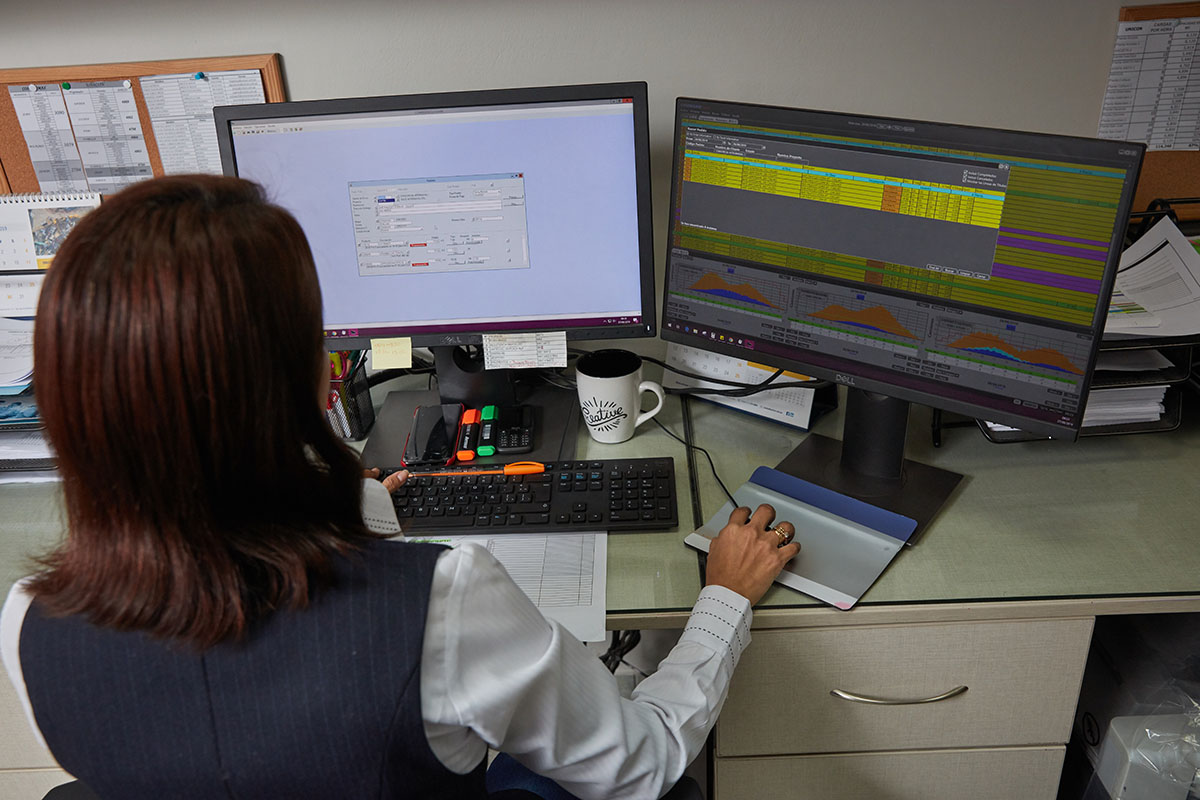

Dispatching will always be dispatching. At its core, it’s a high-skill role that depends on people who can juggle moving parts, make quick decisions, and stay composed under pressure. That hasn’t changed — and it won’t. Great dispatchers are still defined by their ability to manage the unexpected while keeping orders moving and customers satisfied.
But for all the technology introduced over the years, most dispatch operations still run the same as they did 20 years ago.
Many teams today are stretched thin, with fewer resources forced to cover more ground. It’s increasingly common for a dispatcher to oversee multiple plants, multiple job sites, and a constant flow of changes — all at once. The tools may be digital, but the work is still largely manual, reactive, and dependent on constant coordination.
Take driver call-out. Reaching drivers to assign next-day start times or confirm schedules is often a manual process that can take hours — and it’s something dispatch teams repeat every day. It works, but it also highlights how much of dispatch still relies on effort and workarounds to keep things moving.
Without a connected, reliable source of truth, consistent visibility is hard to maintain. Dispatchers are left piecing together information from different systems, phone calls, and updates, adding friction to nearly every decision. At the same time, customer expectations have evolved. Contractors and job sites expect accurate ETAs, quicker responses, and a level of service that feels seamless.
Dispatching is still dispatching — but the margin for error is smaller, the pace is faster, and the stakes seem to be higher. Meanwhile, disconnected on-premises systems are limiting dispatchers and ready mix teams to operate without flexibility and anticipation.
What’s changing now though isn’t the dispatcher role — but rather the work that gets done.
With cloud technology, dispatchers can operate within a connected, real-time workflow that brings the entire operation into view. Orders, trucks, plant activity, and changes are visible as they happen — not after the fact, and not scattered across systems.
This kind of visibility removes much of the guesswork and reduces the need for constant check-ins and manual coordination. Instead of chasing updates, dispatchers can make decisions based on what’s actually happening in the moment.
That shift creates something the industry hasn’t really had before: the ability to move beyond the long-standing way of doing things that teams were forced to make work.
The craft of dispatching in a ready mix environment hasn’t disappeared — it’s evolved. The mindset is the same: deliver reliably, communicate clearly, and keep customers confident in every load. But now, dispatchers are supported by a system that matches the pace and complexity of today’s operations, giving them the visibility to run with simplicity — not just work harder within the same parameters.
If it feels as if your dispatch needs have outgrown the constraints of an on-prem system, you’re not alone. Dispatching across the ready mix field is shifting as a whole. To learn more about what’s possible with cloud-informed decision making, visit our webinar recording.