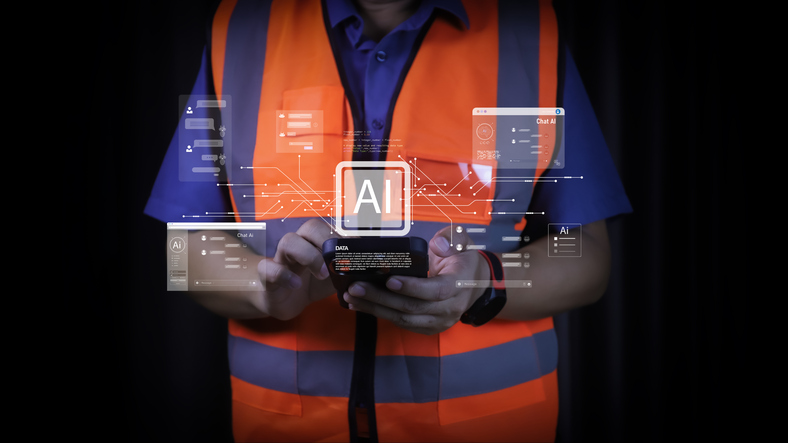

The Human Advantage in an AI-Driven Operation
Operations teams keep the heavy building materials industry moving. In concrete, asphalt, and aggregate operations, every day requires balancing production schedules, dispatch coordination, equipment availability, quality control, inventory management, and customer expectations. The pace is constant, and the margin for error is small.
What is changing is the volume and complexity of decisions operations teams are expected to make in real time. Across the industry, teams are managing more data, tighter timelines, labor challenges, rising customer expectations, and increasing pressure to operate efficiently without sacrificing quality or responsiveness.
That is where AI is beginning to reshape operational workflows.
Not by replacing operational expertise, but by helping experienced teams process information faster, identify patterns earlier, and respond more proactively to issues that impact production and delivery performance.
Why the Brain Pushes Back
For many operations professionals, the challenge is not whether AI can provide value. The challenge is trust.
Operations environments are built on consistency and predictability. People rely on processes they know because those processes have been tested under pressure. From a psychological standpoint, hesitation around AI is understandable. The brain is wired to interpret uncertainty as risk, especially in environments where mistakes carry operational and financial consequences.
In heavy building materials operations, experience becomes instinct. Dispatchers recognize scheduling problems before they escalate. Plant managers notice subtle shifts in production flow. Quality control teams develop a feel for conditions that no dashboard can fully replicate.
That kind of operational intuition is built over years, sometimes decades, of repetition and experience. Naturally, teams can be skeptical when technology enters the conversation promising to improve decisions they have already spent years learning how to make.
But the most valuable AI systems are not trying to replace operational instinct. They are designed to reinforce it.
From Gut Feeling to Greater Visibility
The most effective operations are not choosing between people or technology. They are creating a symbiotic relationship between the two.
AI can process operational data at a scale and speed that would overwhelm even the most experienced teams, while operations professionals provide the judgment, context, and decision-making ability that technology alone cannot replicate.
In many ways, AI functions less like an autopilot and more like an experienced co-pilot. It continuously analyzes information, surfaces patterns, and highlights risks or opportunities, allowing operations teams to spend less time chasing information and more time staying ahead of problems.
That shift has the potential to change the rhythm of operations entirely. Instead of reacting to delays, downtime, or inefficiencies after they happen, teams can operate with greater visibility into what is happening now and what is likely to happen next.
The Operational Ripple Effect
In heavy building materials operations, small issues rarely stay small.
A delayed truck affects dispatch timing. Equipment downtime impacts production schedules. An inventory discrepancy creates scheduling complications downstream. Operations teams are constantly managing interconnected moving parts where every decision creates a ripple effect somewhere else in the process.
AI helps operations teams see those ripple effects earlier.
By identifying patterns across systems, workflows, and historical performance, AI can help teams anticipate problems before they disrupt production or customer commitments. Instead of relying solely on hindsight reporting, operations can begin operating with predictive visibility.
For concrete, asphalt, and aggregate operations, that can mean:
- More proactive maintenance planning
- Better production and dispatch coordination
- Improved fleet utilization
- Faster operational decision-making
- Reduced administrative burden
- Greater visibility across plants and teams
The value is not automation for the sake of automation. The value is creating space for operations professionals to focus on the work that requires human judgment and experience.
Smarter Operations Still Need Experienced Operators
There is a misconception that AI creates distance between people and operations. In reality, the strongest operational environments will likely become more dependent on experienced professionals, not less.
Technology can identify patterns. It can surface recommendations. It can automate repetitive tasks. But it cannot replace operational leadership, accountability, adaptability, or experience under pressure.
The future of operations will belong to teams that know how to combine operational instinct with intelligent systems in a way that creates faster, more connected, and more resilient workflows.
The operations teams that thrive will not be the ones that hand decisions over to technology completely. They will be the ones that learn how to work alongside it effectively.
Building the Next Generation of Operational Confidence
The heavy building materials industry has always evolved through practical innovation. The next phase of operational progress will not come from replacing people with technology. It will come from giving experienced teams better visibility, stronger decision-making tools, and more connected operational intelligence.
AI is not replacing the human advantage in operations.
It is helping operations teams scale it.
See how Command Cloud helps ready mix, aggregate, asphalt, and concrete operations gain real-time visibility, improve dispatch coordination, and scale operational performance with connected intelligence.