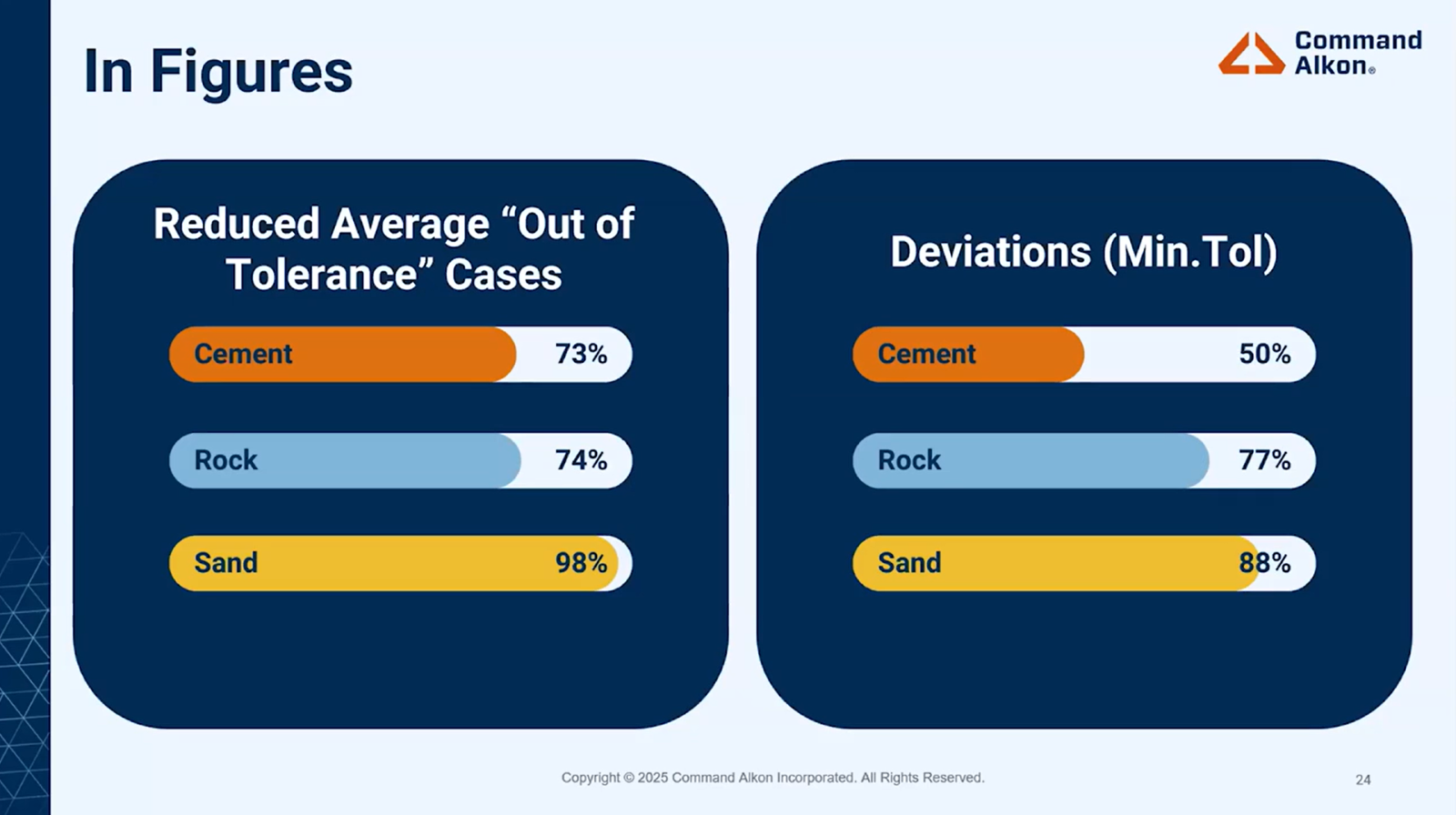

Tired of battling out-of-tolerance alarms and rejections? Concrete producers worldwide are constantly blitzed by wasted materials, frustrated operators, and unhappy customers. Our recent webinar, Set a New Batching Standard With AI, shows how AI-driven batching alleviates these headaches—cutting out-of-tolerance loads to near zero.
The Persistent Cost of Out-of-Tolerance Batches
Each time a load exceeds tolerance on cement or aggregates, you may waste time, materials, or even scrap the entire batch. During our recent webinar, our VP of Strategic Accounts and Partners Alex Leblond highlighted a striking success: one plant dropped its fly ash out-of-tolerance rate from 29% to just 0.1%. No, this wasn’t the result of nonstop manual tuning — this came from real-time, dynamic gate and flow adjustments, reducing errors and boosting consistency.
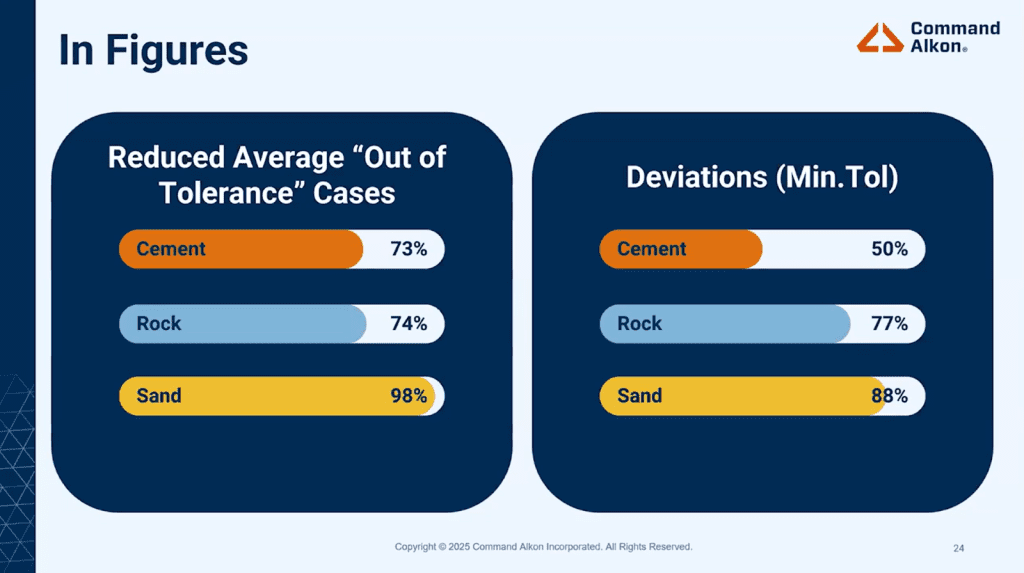
Average based on all the plants that have Batch AI activated
How AI Tackles the ‘Why’ Behind Tolerances
Traditional batching often leans on historical data settings. If your silo is drier today than it was last week, those outdated assumptions can overshoot or undershoot. Batch AI processes current data 10 times per second, updating signals accordingly.
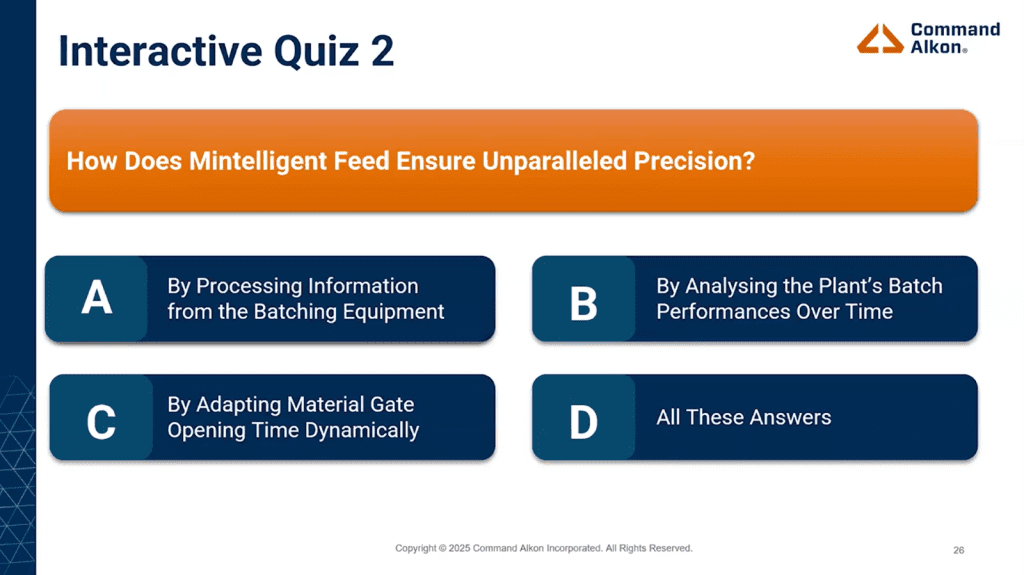
Our AI integrator Loric Vezin explained how this live approach tracks flow behavior, adapting instantly to moisture spikes, or freshly delivered cement. That nearly eliminates out-of-tolerance events. Once this new level of accuracy is in place, mix designs can be fine-tuned, as there is no longer need for over-designed mixes to compensate for batching variation factors. This saves producers from unnecessarily wasting expensive materials like cement.
Bridging Skill Gaps and Labor Shortages
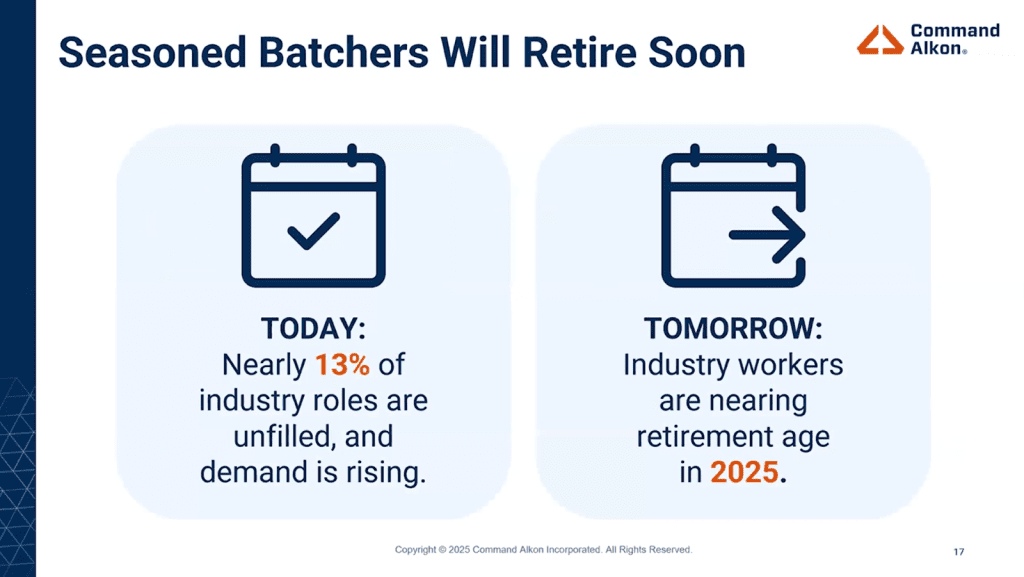
With veteran batchers retiring, AI fills the expertise gap. In the webinar Q&A, one attendee asked if a yard supervisor could step in when the main batcher was absent. Absolutely. Batch AI automates tricky weighing tasks, leaving staff free to load materials, manage trucks, and handle safety checks—no advanced batching knowledge required.